The timing of egg freezing affects how many mature eggs can be collected and their chance of producing a chromosomally viable embryo later, but age is not the only factor. By weighing age, ovarian-reserve results, future plans, medical deadlines, treatment demands, and storage limitations, you can decide what questions to take to a fertility specialist.
Key takeaways
- Egg quality declines with age, so timing matters more than a single test result.
- AMH estimates egg supply; it cannot predict egg quality or a future live birth.
- Freeze eggs if you want to preserve choice without choosing sperm or embryos now.
- One cycle involves ovarian stimulation, monitoring, egg retrieval and recovery over several weeks.
How Age Changes the Case for Freezing Eggs
Egg freezing makes practical sense when future pregnancy matters but you do not want to try for a child yet.
Egg freezing timing matters because age and egg quality are closely linked: eggs frozen in the early 30s generally yield more usable eggs per cycle and have fewer chromosome errors than eggs frozen at 38 or 40. That population-level pattern explains why freezing before the mid-30s is often discussed, not because older women cannot benefit.
1. Consider freezing sooner if you expect to delay pregnancy for several years because of education, work, finances, relationship circumstances, or medical treatment that could affect fertility.
2. Review your age alongside ovarian-reserve results. AMH and antral-follicle count help estimate how many eggs stimulation might produce, but they do not measure egg competence. A low AMH does not make pregnancy impossible, and a high result does not guarantee a healthy embryo.
3. Treat stored eggs as an option, not insurance. A future live birth depends on the number of mature eggs frozen, survival after warming, fertilization, embryo development, chromosomal status, implantation, and pregnancy health.
Freezing preserves the egg’s age-related potential at retrieval; it does not preserve your future uterus or general pregnancy health. Years later, risks such as miscarriage, gestational diabetes, high blood pressure, and caesarean delivery still rise with the age at pregnancy.
Your future pregnancy planning should therefore weigh egg-freezing timing against medical history, reproductive goals, ovarian reserve, and how long you expect to wait.
What Testing Reveals About Egg Yield—and What It Cannot Predict
AMH and antral follicle count (AFC) estimate how strongly your ovaries may respond to stimulation and how many eggs one retrieval could produce. They do not measure whether those eggs have normal chromosomes or will become a baby; age remains the stronger guide to egg competence.
Clinicians interpret the results together, not from one number:
- AMH reflects the pool of small follicles. A low result can mean fewer eggs retrieved, not that pregnancy is impossible.
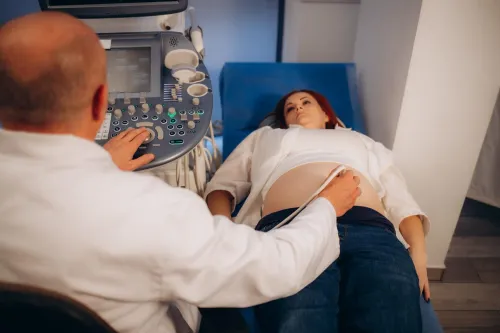
- AFC counts small follicles on a transvaginal ultrasound. A high count can predict a stronger response, but it does not guarantee healthy eggs.
- FSH is usually checked early in the menstrual cycle. An elevated level can signal reduced ovarian reserve, but one result does not settle the decision.
- Estradiol is interpreted with FSH because an unexpectedly high early-cycle level can mask an elevated FSH result.
Discuss mature eggs stored, not just eggs collected. Some retrieved eggs are immature and cannot be vitrified for future use. There is no universal egg-number target that guarantees a live birth, so your clinician should relate a proposed target to your age, ovarian reserve, budget, and willingness to undergo another cycle.
Freezing is not an insurance policy. A future attempt still depends on egg survival after warming, fertilization, embryo development, chromosomal status, implantation, and pregnancy factors. Ask when donor sperm, a partner’s sperm, embryo testing, another retrieval, or donor eggs could enter the plan.
Unfertilized Eggs or Embryos: Which Future Option Fits Your Plans?
Choose unfertilized egg freezing when you want to preserve reproductive choice without committing to a partner or donor. Choose embryo freezing when a sperm source and a clearer family-building plan are already available.
| Option | What is stored | Planning consequence |
|---|---|---|
| Unfertilized egg freezing | Mature eggs that have not been fertilized | You decide later whether to use a future partner’s sperm or donor sperm |
| Embryo freezing | Eggs fertilized with sperm and developed in the laboratory, usually to the blastocyst stage | You already know which embryos reached that developmental stage, but the sperm source and genetic contributors are established |
Embryo freezing requires sperm at the time of treatment. That sperm may come from a partner or donor, so it is not an option for someone who has not selected a sperm source.
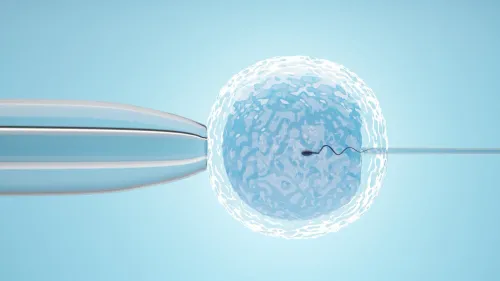
Unfertilized egg freezing keeps that decision open, although future use commonly involves intracytoplasmic sperm injection, or ICSI, because freezing can make the egg’s outer layer less receptive to conventional sperm penetration.
Neither choice guarantees a baby. Ask about the number of mature eggs or embryos stored, the laboratory’s warming and survival results, storage fees, and the possibility of another retrieval. Embryo testing may add information about chromosomal status, but ICSI and testing do not remove age-related pregnancy risks or guarantee implantation.
What One Egg-Freezing Cycle Involves and How Long It Takes
One egg-freezing cycle usually takes 10 to 14 days of ovarian stimulation, followed by retrieval and laboratory freezing. Before medication starts, testing commonly includes AMH, an ultrasound antral-follicle count, hormone levels, and infectious-disease screening. These results help select medication doses and identify safety concerns.
- At baseline, the clinic confirms the ovaries are ready and gives instructions for daily injections.
- During stimulation, daily injections encourage several follicles to grow. Ultrasound scans and blood tests track follicle size and estradiol levels, allowing dose adjustments.
- When enough follicles reach the target size, you take a trigger injection. Retrieval is usually scheduled about 34 to 36 hours later.
- Egg retrieval under sedation or anesthesia uses a vaginal ultrasound probe and a thin needle to collect fluid from the follicles. The procedure commonly takes less than an hour.
- After recovery, expect pelvic cramping, bloating, fatigue, or light bleeding. Arrange transport home and follow instructions about activity, warning signs, and medication.
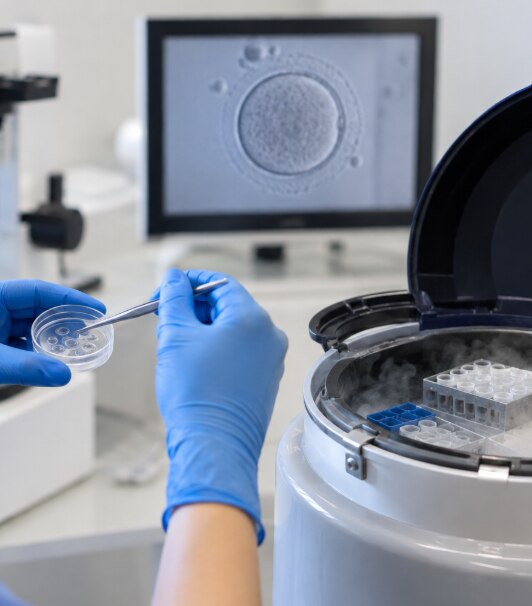
- In the laboratory, mature eggs are rapidly frozen by vitrification and stored in liquid nitrogen. Only mature eggs are suitable for this process.
Call the clinic urgently for severe abdominal pain, rapid weight gain, breathing difficulty, fainting, heavy bleeding, or fever. These symptoms can signal ovarian hyperstimulation syndrome, bleeding, infection, torsion, or another complication.
One retrieval may not produce the number of mature eggs you and your specialist consider useful. A second cycle becomes more likely with older age, diminished ovarian reserve, or a low first-cycle yield; your response and future plan determine the timing.
Planning for the Day You Use the Frozen Eggs
Years later, the clinic warms the vitrified eggs, usually using an ultrarapid method that limits ice-crystal damage. Some eggs may not survive warming; reported vitrification survival is commonly about 80% to 90%, but survival is not a live-birth rate.
Surviving eggs are generally fertilized with ICSI because freezing can alter the egg’s outer layer and make conventional sperm entry less reliable. The resulting embryos undergo embryo culture, with optional chromosomal testing, followed by embryo transfer and pregnancy testing.
ICSI does not remove age-related embryo aneuploidy, and pregnancy years later still carries risks linked to the age of the uterus and the pregnant person, including hypertension, gestational diabetes, caesarean delivery and miscarriage.
Before deciding, ask the clinic to confirm:
- How many mature eggs are stored, the laboratory’s warming survival rate, and whether its results apply to vitrified eggs rather than older slow-freezing methods.
- What happens if you need a partner’s sperm, donor sperm, another retrieval, embryo testing or donor eggs.
- Storage fees, transfer fees and whether eggs can be moved to another laboratory.
- How the clinic estimates your chance of a live birth from your number and age at freezing, rather than promising success.
At Deshmukh Maternity Hospital, use the consultation to ask who will manage warming, ICSI, embryo culture, transfer and pregnancy testing, so future costs and decisions are clear before storage.
Frequently asked questions
How does age affect the decision to freeze eggs?
Egg quality and quantity decline with age, so freezing eggs earlier generally offers better prospects for future use. Your personal timeline, reproductive plans and medical history also matter.
What can AMH and other fertility tests predict?
AMH and antral follicle count help estimate how many eggs you may retrieve in a cycle. They do not measure egg quality or guarantee pregnancy, embryo development or a live birth.
Should I freeze unfertilized eggs or embryos?
Freeze unfertilized eggs when you want to preserve reproductive choice without selecting sperm or creating embryos now. Embryo freezing fits plans involving a known sperm source and an agreement about embryo use.
How long does one egg-freezing cycle take?
A cycle includes ovarian stimulation, monitoring appointments, an egg retrieval and recovery, and usually takes several weeks from the start of medication to retrieval.
What happens when I decide to use frozen eggs?
The eggs are thawed, fertilized with sperm through intracytoplasmic sperm injection, and monitored as embryos. A suitable embryo can then be transferred to the uterus.