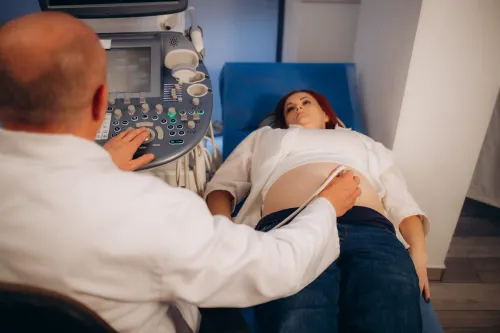
Unexplained infertility is diagnosed only after standard testing has not identified a clear problem with ovulation, ovarian reserve, the uterus, fallopian tubes or semen. You will learn which evaluations fertility specialists use, how they interpret borderline results, and when additional testing can change the next treatment decision.
Key takeaways
- Unexplained infertility is diagnosed only after standard tests find no clear cause.
- Both partners need evaluation before treatment decisions are made.
- Extra tests help only when results would change your treatment plan.
- Your next step depends on age, test results, duration, and previous treatment.
What unexplained infertility means—and when doctors use the diagnosis
Unexplained infertility means no clear cause has been found after standard testing of ovulation, ovarian reserve, the uterus and fallopian tubes, and semen. It is a diagnosis of exclusion, not proof that both partners have no biological problem.
Doctors usually use it when ovulation is occurring, at least one fallopian tube is open, and semen analysis shows no clearly significant abnormality.
Doctors may start the evaluation earlier when your history raises concern for reduced fertility or a condition that routine testing could miss:
- Irregular or absent periods, which can indicate ovulatory dysfunction
- Previous pelvic infection, sexually transmitted infection, ectopic pregnancy, or pelvic surgery
- Painful periods or intercourse, which can point toward endometriosis
- Abnormal uterine bleeding or a known uterine condition
- Chemotherapy or a family history of early menopause
- Medication use, sexual frequency, or difficulty timing intercourse
Age sets the usual starting point. For a woman younger than 35, doctors recommend an infertility evaluation after 12 months of regular unprotected intercourse. At age 35 or older, seek an infertility evaluation after 6 months; after 40, arrange it promptly rather than waiting.
Egg number and chromosomal quality decline with age, so normal test results do not carry the same treatment urgency at every age. The label can also change if later testing finds declining ovarian reserve, endometriosis, a tubal or uterine problem, or repeated semen abnormalities.
The core tests used to rule out a missed cause
Fertility evaluation tests start with whether ovulation is occurring, whether the reproductive anatomy is open and suitable, and whether semen shows a clear problem. Specialists combine results rather than treating one normal report as proof that every cause has been excluded.
- Menstrual history and cycle tracking often identify regular ovulation. A mid-luteal progesterone test can confirm it when the history is unclear; thyroid-stimulating hormone or prolactin testing is added when symptoms or medical history point to those disorders.
- Transvaginal pelvic ultrasound examines the uterus and ovaries for fibroids, adenomyosis, cysts and visible endometriosis-related findings. It also measures antral follicle count. A normal scan does not exclude superficial endometriosis.
- AMH and antral follicle count, with basal FSH when indicated, estimate ovarian response to stimulation and the likely number of eggs retrieved during IVF. A low AMH does not prove sterility or reliably predict natural conception.
- Hysterosalpingography checks the uterine outline and whether contrast passes through the fallopian tubes. Saline sonography shows the uterine cavity; contrast ultrasound can assess tubal flow without an X-ray.
- Semen analysis records volume, concentration, motility and morphology. An abnormal result is usually repeated because illness, abstinence interval and collection problems can alter one sample.
| Test | Main question | Important limit |
|---|---|---|
| Hysterosalpingography | Is at least one tube open? | Does not exclude endometriosis or adhesions |
| Saline sonography | Is the uterine cavity shaped normally? | Does not assess every pelvic cause |
| Semen analysis | Is there a significant male-factor finding? | One sample may not represent the usual result |
How specialists interpret results from both partners
A single result rarely settles the question. Specialists look for a pattern across both partners, then judge whether the findings fit the couple’s history and time trying to conceive.
- Semen: They assess concentration, motility, morphology and volume together. Low concentration with good motility tells a different story from several borderline measures occurring together. A normal semen analysis does not prove normal fertility, while an abnormal result does not make natural conception impossible. If the first test is abnormal, a repeat semen analysis, ideally at least one month later, shows whether the finding persists.
- Ovulation: Regular cycles support ovulation, but doctors confirm it when the history is uncertain or symptoms suggest a problem. A mid-luteal progesterone test is taken about one week before the expected period, not automatically on day 21. Thyroid and prolactin testing fits when symptoms or medical history point toward hormonal disruption.
- Imaging: Ultrasound findings are read alongside symptoms and examination. A normal uterus and ovaries reduce concern for visible structural problems, but they do not exclude superficial endometriosis or every cause of impaired fertility.
Doctors therefore avoid calling fertility “normal” because one test falls within a reference range. They also avoid treating one borderline result as a complete explanation. A later repeat semen analysis, changing ovarian reserve, or a new uterine or tubal finding can change the interpretation and the diagnosis.
When extra tests are useful—and when they add cost without changing care
Extra tests are useful when a symptom, risk factor or repeated treatment failure would change the next decision. Without that link, they can produce borderline results, extra appointments and expensive treatment without improving the chance of pregnancy.
Discuss these situations with a fertility specialist:
- Laparoscopy for endometriosis: consider it when you have significant pelvic pain, painful intercourse, prior pelvic infection or surgery, an ectopic pregnancy, or imaging that suggests endometriosis or adhesions. A normal hysterosalpingogram does not exclude these conditions, but laparoscopy is not a routine test for every unexplained case.
- Sperm DNA fragmentation testing: discuss it after repeated IVF or ICSI failure, recurrent pregnancy loss, or a significant male-factor history when the result would alter treatment. Do not order it automatically after one routine semen analysis.
- Genetic testing infertility: consider parental karyotyping after recurrent pregnancy loss or a family history of chromosomal problems. Male karyotyping or Y-chromosome microdeletion testing belongs mainly in severe oligospermia or azoospermia, not routine unexplained infertility.
- Immune panels: broad natural-killer-cell, cytokine and thrombophilia panels rarely improve care. Ask about targeted antiphospholipid testing when recurrent pregnancy loss makes it clinically relevant.
- Endometrial receptivity testing: discuss it only after repeated implantation failure and a review of embryo quality, uterine anatomy and transfer technique. It is not a standard first-line test, and a result should not automatically dictate embryo-transfer timing.
Ask one question before approving any add-on: “What decision will this result change?”
What the diagnosis means for the next decision
A normal work-up is not a promise that pregnancy will occur soon. Unexplained infertility treatment decisions should account for female age and fertility, the duration of infertility, previous pregnancies, treatment preferences and the time you can reasonably continue trying.
| Option | When it fits | What to clarify |
|---|---|---|
| Continue trying | Younger than 35, shorter duration of infertility and no concerning history | Set a firm review date rather than waiting without a plan |
| IUI | Ovulation and at least one open tube are confirmed, with no major semen abnormality | Agree on the number of cycles and when to change approach |
| IVF | Age, duration, ovarian-reserve concerns or prior treatment make time important | Ask how the expected benefit compares with cost, injections and monitoring |
Seek a fertility specialist consultation when the diagnosis feels too broad, results conflict, symptoms suggest endometriosis, or treatment has failed. Recheck the diagnosis if ovarian reserve declines, semen results become abnormal, or a new uterine or tubal finding appears; “unexplained” is not a permanent guarantee that every cause has been excluded.
At Deshmukh Maternity Hospital, a review can help reassess whether the label still fits and whether continued trying, IUI or IVF matches your current evidence and priorities. Ask for a written plan with the next step, the deadline for reviewing it and the specific result that would change course.
Frequently asked questions
What does unexplained infertility mean?
It means standard testing has not identified a clear cause after assessing ovulation, ovarian reserve, the uterus, fallopian tubes, and semen. It does not prove that both partners have no biological problem.
Which tests help rule out a missed cause?
Doctors review ovulation, ovarian reserve, the uterus, fallopian tubes, and semen analysis. They use these results together rather than relying on one test alone.
How do specialists interpret results from both partners?
They assess the female and male factors together, including ovulation, ovarian reserve, reproductive anatomy, and semen findings, before recommending treatment.
When are extra infertility tests useful?
An extra test is useful when its result could change treatment. If it will not alter the next decision, it can add cost and delay without improving care.